
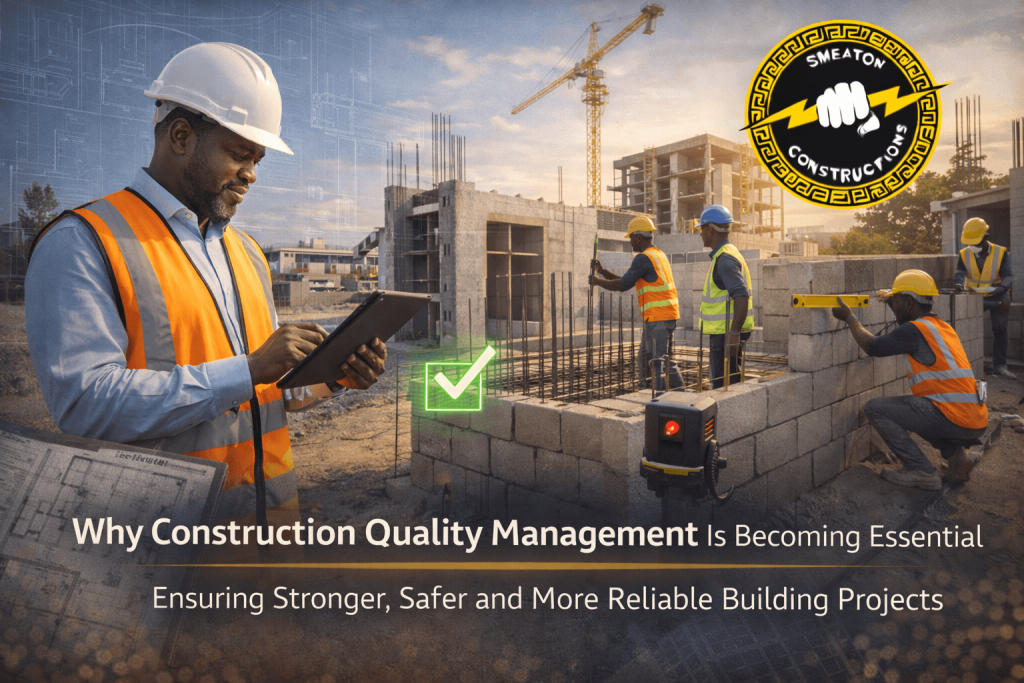
The construction industry is evolving rapidly across Uganda. As building designs become more advanced and project investments increase, the need for strong construction quality management has become more important than ever.
Modern projects now require careful coordination, skilled workmanship and strict quality control to ensure buildings remain safe, durable and efficient throughout their lifespan.
At Smeaton Constructions, quality management has become a central part of project delivery, helping ensure that construction standards are maintained from the foundation stage to final finishing.
Understanding construction quality management
Construction quality management refers to the systems and procedures used to ensure that building projects meet the required design standards and performance expectations.
It typically includes:
- proper material selection
- adherence to structural specifications
- skilled workmanship on site
- regular inspections and supervision
- documentation of construction processes
These practices help ensure that buildings are constructed correctly and safely.
-
2-Bedroom House Plan
Original price was: $ 300.$ 250Current price is: $ 250. -
2-Bedroom House Plan Modern Residential Design
Original price was: $ 300.$ 250Current price is: $ 250. -
3 Bedroom Bungalow House Plan
Original price was: $ 300.$ 250Current price is: $ 250.



Increasing complexity of modern construction projects
Today’s construction projects often involve:
- advanced structural systems
- specialised installation processes
- integrated electrical and mechanical services
- complex architectural finishing works
Because of this complexity, strict quality management is necessary to ensure every component of the project performs as intended.
Protecting long-term building performance
Buildings are long-term investments that must remain functional for many years.
Strong quality management helps ensure:
- structural stability
- durability of building materials
- reliable interior installations
- efficient building systems
When quality standards are followed properly, buildings require fewer repairs and remain safe for occupants.
Preventing costly construction defects
Construction defects can lead to serious financial and safety challenges.
Common issues that arise from poor quality control include:
- structural cracks
- leaking roofs or plumbing systems
- poorly installed finishes
- electrical installation problems
Effective quality management helps identify potential problems early before they become costly repairs.
Improving contractor accountability
Quality management systems also strengthen accountability across project teams.
Clear procedures ensure that:
- contractors follow approved building designs
- supervisors monitor construction progress
- engineers verify technical requirements
- clients receive the expected construction standards
This creates transparency throughout the project lifecycle.
Supporting regulatory compliance
Construction quality management helps projects comply with national building standards and regulatory requirements.
By following proper construction practices, projects can achieve:
- safe building structures
- compliant electrical and plumbing installations
- reliable fire safety measures
- organised project documentation
Compliance improves public confidence in the construction sector.
Enhancing client confidence in construction projects
Property developers, homeowners and businesses want assurance that their investments are secure.
Strong quality management gives clients confidence that:
- the building will perform as expected
- construction standards have been properly followed
- the finished structure will remain safe and durable
This trust is essential for long-term industry growth.
Improving project efficiency and coordination
Quality management also improves project coordination by ensuring that all teams follow clearly defined procedures.
This helps:
- reduce construction errors
- improve communication between engineers and contractors
- maintain project schedules
- ensure consistent workmanship across the site
Better coordination results in smoother project delivery.
The future of construction quality management
As construction continues to grow in scale and complexity, quality management will become even more important.
Developers and contractors are increasingly adopting:
- digital project monitoring systems
- improved site supervision practices
- stronger material verification processes
- structured quality assurance programmes
These systems are helping modernise construction management.
Final outlook
Construction quality management is becoming a cornerstone of modern building projects.
By maintaining high standards during planning, construction and finishing stages, the industry can deliver safer, stronger and longer-lasting buildings.
Strong quality management practices will continue to shape the future of construction across Uganda.