
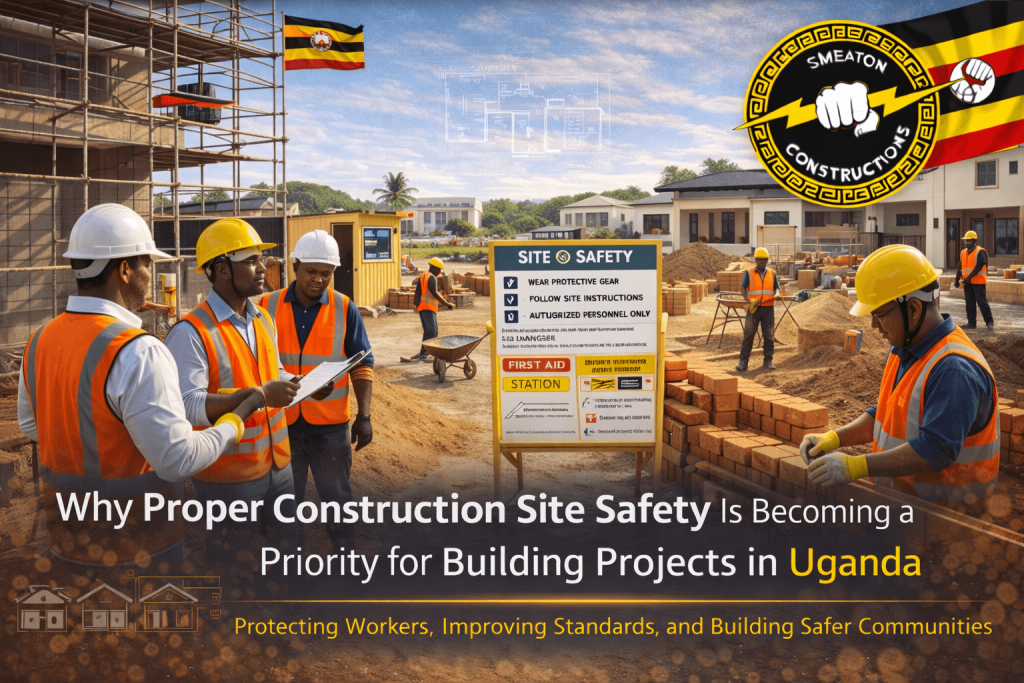
Construction activity continues to expand across Uganda as cities grow and new residential, commercial and infrastructure projects are developed. With this growth comes a greater focus on construction site safety, as builders, developers and regulators increasingly recognise the importance of protecting workers and ensuring safe building practices.
In urban areas such as Kampala, large construction projects require careful coordination and safety management to reduce risks and maintain professional standards. Construction companies like Smeaton Constructions understand that maintaining safe working environments is essential for successful project delivery.
-
2-Bedroom House Plan
Original price was: $ 300.$ 250Current price is: $ 250. -
2-Bedroom House Plan Modern Residential Design
Original price was: $ 300.$ 250Current price is: $ 250. -
3 Bedroom Bungalow House Plan
Original price was: $ 300.$ 250Current price is: $ 250.



The growing importance of safety in the construction industry
Construction sites involve many activities happening simultaneously, including excavation, masonry work, electrical installations and heavy material handling. Without proper safety procedures, these activities can pose risks to workers and nearby communities.
Improving site safety helps achieve several important goals:
- protecting workers from avoidable injuries
- reducing construction delays caused by accidents
- improving productivity on construction sites
- maintaining professional industry standards
As the construction industry continues to modernise, safety management is becoming a key part of project planning.
Common safety risks on construction sites
Construction environments often involve several potential hazards that must be carefully managed.
Some of the most common risks include:
- working at heights during roofing or structural work
- handling heavy building materials
- operating power tools and machinery
- exposure to dust and construction debris
- electrical installation hazards
Identifying these risks early allows contractors to implement preventive measures.
The role of protective safety equipment
Personal protective equipment plays a major role in reducing workplace risks on construction sites.
Essential safety gear typically includes:
- safety helmets to protect against falling objects
- protective gloves for handling materials
- safety boots for foot protection
- reflective vests for improved visibility
- safety goggles to protect the eyes
Providing workers with proper safety equipment significantly improves site safety conditions.
Safety training for construction workers
Training is another critical factor in maintaining safe construction environments.
Construction teams benefit from learning about:
- safe use of construction tools and machinery
- correct lifting and material handling techniques
- emergency procedures and hazard reporting
- safe working practices for electrical and structural work
Proper training helps workers recognise risks and respond appropriately to potential hazards.
Site supervision and safety management
Professional supervision is essential for ensuring safety procedures are followed consistently.
Experienced project managers and site supervisors typically monitor:
- worker compliance with safety guidelines
- proper use of protective equipment
- safe organisation of work areas
- correct storage of construction materials
Continuous supervision helps maintain a well-organised and safe working environment.
Organised construction sites improving safety
A well-organised construction site significantly reduces the likelihood of accidents.
Good site organisation includes:
- clearly marked working areas
- safe storage of tools and materials
- proper waste management
- secure access points for workers and visitors
These measures help create safer and more efficient working environments.
Safety regulations supporting construction standards
Government agencies and industry regulators are increasingly encouraging safer construction practices.
Regulations and professional guidelines help ensure that:
- contractors follow approved construction procedures
- workers receive appropriate safety protection
- building projects meet professional safety standards
These frameworks contribute to improving overall industry practices.
The long-term benefits of safe construction sites
Investing in construction safety benefits both workers and project developers.
Safer sites often lead to:
- improved workforce morale
- fewer work interruptions
- better project timelines
- stronger professional reputations for contractors
These benefits make safety management an essential component of modern construction.
Final outlook
As the construction sector continues to grow across Uganda, safety is becoming an increasingly important priority for builders, developers and project managers. By focusing on protective equipment, proper training and organised site management, construction teams can create safer working environments while improving project outcomes.
Promoting strong safety practices will play a key role in building a more professional and sustainable construction industry in Uganda.