
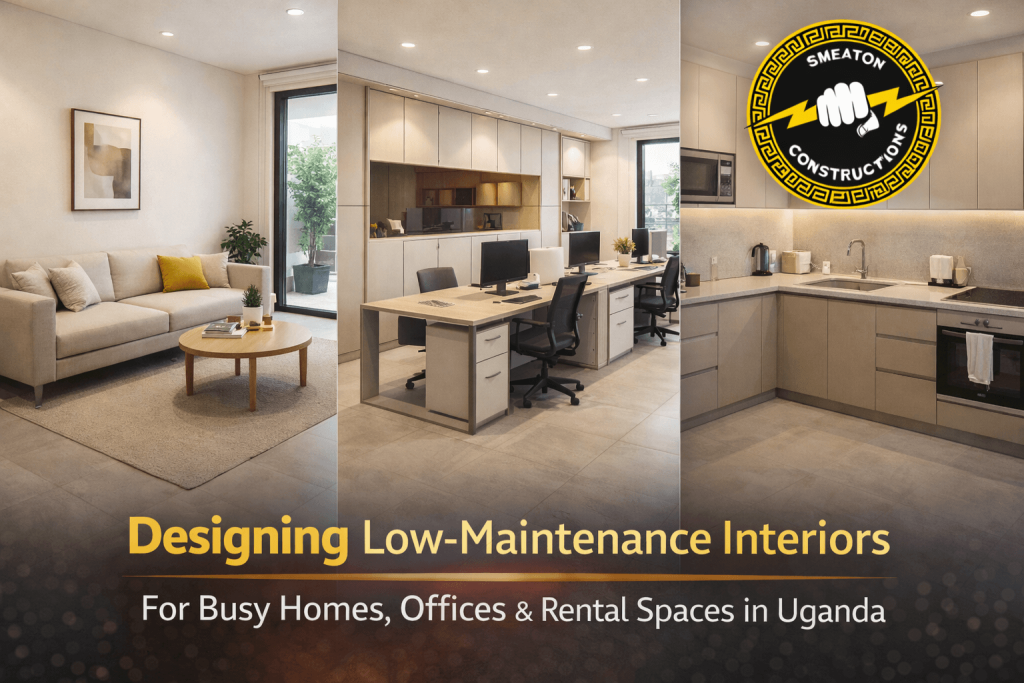
Interior finishing has become one of the most important stages in modern building projects. While structural construction provides stability and strength, interior finishing determines how comfortable, attractive and functional a space becomes.
Across Uganda, property developers, homeowners and businesses are now focusing more on modern interior finishes that improve usability, appearance and long-term value.
At Smeaton Interiors, interior projects are increasingly reflecting new trends that respond to modern lifestyles, workspace needs and evolving architectural standards.
The growing importance of interior finishing
Interior finishing is no longer treated as a simple decoration stage. Today it influences:
- building usability and comfort
- property value and market appeal
- durability of interior spaces
- efficiency of lighting, ventilation and movement
Well-designed interiors help transform buildings from basic structures into functional living and working environments.
Trend 1: Clean and minimalist interior layouts
Modern homes and offices are moving toward simple and clean interior layouts.
This approach focuses on:
- uncluttered spaces
- clear circulation areas
- well-defined functional zones
- minimal but purposeful decorative elements
Minimalist interiors improve comfort while making rooms appear larger and more organised.
Trend 2: Durable and low-maintenance finishing materials
Homeowners and businesses now prioritise finishes that last longer and require minimal maintenance.
Popular choices include:
- durable wall coatings
- high-quality floor finishes
- moisture-resistant materials for kitchens and bathrooms
- easy-to-clean surfaces
These finishes maintain appearance for longer periods and reduce repair costs.
Trend 3: Natural lighting and ventilation integration
Modern interior design strongly integrates natural light and airflow.
Interior layouts now support:
- larger windows and glass elements
- open-plan living and working areas
- improved ventilation pathways
- brighter and healthier indoor environments
Natural lighting reduces energy use while creating welcoming interior spaces.
Trend 4: Smart storage and built-in solutions
Storage has become an essential part of modern interior design.
New projects incorporate:
- built-in wardrobes
- concealed storage cabinets
- multi-functional furniture
- integrated shelving systems
These solutions maximise available space while keeping interiors organised.
Trend 5: Flexible interior spaces for modern lifestyles
Many buildings now require interiors that can adapt to different uses.
Flexible interior designs allow spaces to function as:
- home offices
- meeting areas
- study rooms
- entertainment spaces
This flexibility allows buildings to respond to changing lifestyle needs without major renovations.
Trend 6: Neutral colours and timeless design choices
Neutral colour palettes are becoming increasingly popular in modern interiors.
These include:
- soft whites
- light greys
- warm beige tones
- natural wood finishes
Neutral designs provide a timeless look while making spaces easier to modify with furniture and décor.
Interior finishing and property value
High-quality interior finishing can significantly improve the value of a building. Well-finished spaces attract:
- homeowners looking for comfort
- tenants seeking modern living spaces
- businesses needing professional work environments
This makes interior finishing an important investment for property developers.
Supporting modern construction standards
Interior finishing today must align with modern construction practices that prioritise:
- quality workmanship
- durable materials
- efficient installation methods
- long-term building performance
Professional interior planning ensures that finishing work contributes to the overall success of the building.
Final outlook
Interior finishing trends in Uganda continue to evolve as homeowners, developers and businesses demand better-performing buildings.
By combining modern design, durable materials and functional layouts, interior spaces are becoming more comfortable, efficient and visually appealing.
These trends are helping shape the next generation of residential and commercial interiors across the country.