
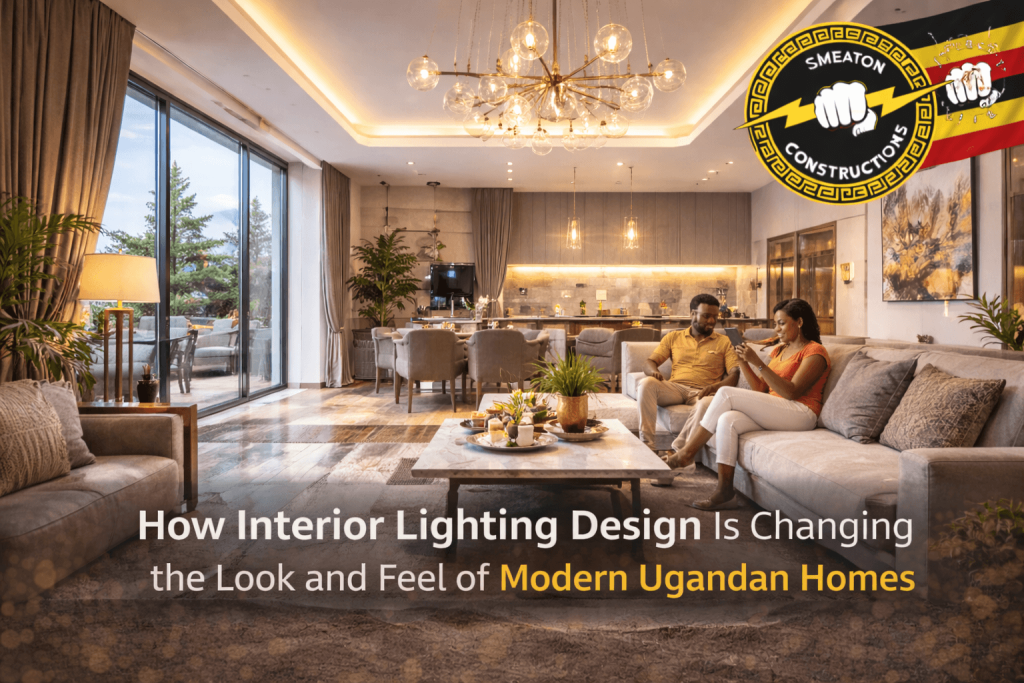
Interior lighting has become one of the most influential elements in modern home design across Uganda. What was once considered a basic functional feature is now a major design component that shapes the mood, comfort and appearance of interior spaces.
In fast-growing cities like Kampala, homeowners are paying closer attention to how lighting can improve both the beauty and functionality of their homes. Well-designed lighting can make rooms feel larger, highlight architectural features and create comfortable living environments.
Companies such as Smeaton Constructions increasingly incorporate professional lighting planning as part of modern interior design to ensure homes meet contemporary living standards.
The shift toward layered lighting design
One of the biggest changes in modern interior lighting is the use of layered lighting systems rather than relying on a single ceiling bulb.
Layered lighting combines several lighting types, including:
- Ambient lighting for general room illumination
- Task lighting for areas such as kitchens and study spaces
- Accent lighting to highlight décor and architectural features
This combination creates balanced lighting that improves both comfort and usability throughout the home.
LED lighting transforming energy efficiency
The growing adoption of LED lighting technology is significantly changing how homes are illuminated in Uganda.
LED lights are popular because they:
- consume less electricity
- last much longer than traditional bulbs
- produce less heat
- offer a wide range of brightness and colour options
For homeowners concerned about rising electricity costs, LED lighting provides a practical and energy-efficient solution.
Statement lighting as a design feature
Modern interiors increasingly use lighting as a decorative feature rather than just a functional one.
Popular design elements include:
- elegant pendant lights above dining tables
- decorative chandeliers in living rooms
- sculptural ceiling lights in hallways
- stylish bedside lighting in bedrooms
These fixtures add personality and character to interior spaces while also improving lighting quality.
Kitchen lighting designed for functionality
The kitchen is one area where lighting design plays a crucial role in everyday usability.
Modern kitchens often incorporate:
- under-cabinet lighting for countertops
- bright ceiling lighting for food preparation
- pendant lighting above kitchen islands
- well-lit storage and pantry areas
Good kitchen lighting helps make cooking safer and more efficient while enhancing the overall look of the space.
Natural lighting improving interior comfort
In addition to artificial lighting, natural daylight is becoming a key part of interior design planning.
Homes are now designed with features such as:
- larger windows
- glass doors connecting indoor and outdoor spaces
- skylights in selected areas
- lighter wall colours that reflect daylight
These features allow natural light to brighten interiors while reducing the need for daytime artificial lighting.
Smart lighting systems entering modern homes
Some modern homes are beginning to adopt smart lighting systems that allow homeowners to control lights digitally.
These systems can allow residents to:
- adjust brightness levels
- control lights remotely using mobile devices
- create different lighting moods for different times of day
- improve energy efficiency
Although still developing in the local market, smart lighting is becoming more common in high-end homes.
Enhancing the atmosphere of living spaces
Lighting has a powerful effect on how comfortable and welcoming a home feels.
Warm lighting tones can create relaxing environments for living rooms and bedrooms, while brighter white lighting works well for kitchens and workspaces.
By carefully selecting the right lighting combination, homeowners can create interiors that feel both functional and visually appealing.
The growing importance of professional lighting planning
As interior design becomes more sophisticated, lighting is increasingly planned during the early stages of building design.
Professional lighting planning helps ensure:
- proper placement of electrical outlets and fixtures
- balanced lighting distribution
- energy-efficient lighting systems
- harmonious integration with the interior design style
This approach helps deliver homes that are both practical and beautifully designed.
Final outlook
Interior lighting design is playing a larger role in shaping modern homes in Uganda. From energy-efficient LED systems to decorative lighting fixtures and smart lighting controls, modern lighting solutions are transforming the way interior spaces look and feel.
With thoughtful lighting design, homeowners can create brighter, more comfortable and visually appealing homes suited for modern living.