
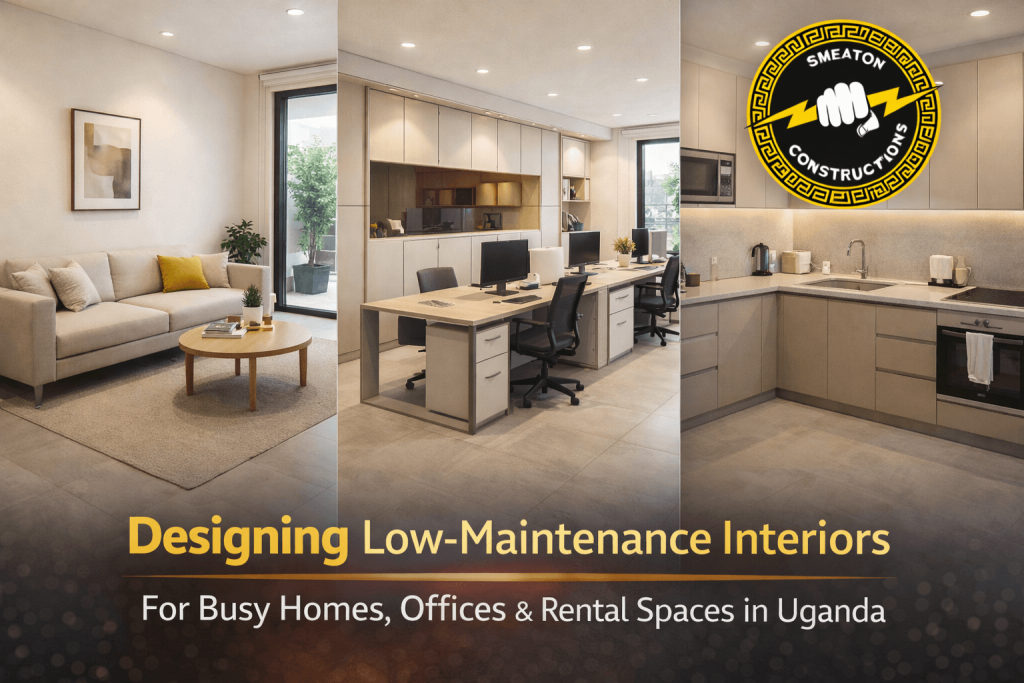
Modern buildings are no longer judged only by how beautiful they look on handover day.
They are judged by how easy they are to maintain, how long finishes last, and how well spaces continue to perform under daily use.
At Smeaton Constructions, interior design and installation focuses on creating low-maintenance spaces that support busy households, active offices and high-turnover rental properties across Uganda.
Why low-maintenance interiors matter today
Busy lifestyles, growing rental markets and shared workspaces mean that interiors experience:
- heavy foot traffic
- frequent cleaning
- regular furniture movement
- fast tenant or user turnover
Without proper planning, finishes begin to fail quickly, increasing repair costs and disruption.
Low-maintenance interiors reduce long-term operating stress for both property owners and occupants.
Smart surface choices that last longer
One of the most effective ways to reduce maintenance is selecting the right finishes.
Low-maintenance interiors prioritise:
- stain-resistant floor finishes
- scratch-resistant wall coatings
- moisture-tolerant materials in kitchens and washrooms
- durable skirting and corner protection
These finishes maintain their appearance longer and require less frequent replacement.
Simple layouts reduce damage and repairs
Complicated interior layouts often lead to:
- congested circulation paths
- furniture clashes
- higher wall and door damage
Low-maintenance planning focuses on:
- clear and direct movement routes
- well-defined functional zones
- practical room proportions
This protects finishes and improves everyday usability.
Built-in storage improves durability and organisation
Loose storage furniture contributes to wall damage and poor space use.
Well-planned interiors include:
- integrated wardrobes and shelving
- recessed storage units
- concealed service cabinets
These solutions improve organisation and reduce long-term wear on walls and floors.
Practical finishes for rental properties
Rental units require finishes that survive repeated occupation cycles.
Low-maintenance rental interiors focus on:
- neutral and durable colour schemes
- easy-to-clean wall surfaces
- robust door hardware and fittings
- standardised finishes for fast repairs
This allows property owners to prepare units quickly between tenants.
Office interiors that reduce daily operational stress
Busy offices require finishes that perform under constant use.
Low-maintenance office interiors support:
- heavy movement in corridors and work zones
- frequent cleaning schedules
- reconfiguration of furniture and equipment
- stable acoustic and lighting performance
This helps organisations operate efficiently without repeated refurbishment.
Moisture control protects interiors for the long term
Poor moisture planning leads to peeling paint, warped finishes and mould.
Low-maintenance interiors include:
- proper wet-area detailing
- correct surface preparation
- suitable materials for kitchens and bathrooms
- effective ventilation coordination
This significantly reduces long-term repair needs.
Easy access to services reduces future disruption
Well-planned interiors allow access to:
- plumbing systems
- electrical installations
- internet and security services
Service access panels and coordinated routing prevent unnecessary demolition when repairs or upgrades are required.
Cost efficiency over the building lifecycle
Low-maintenance interiors help property owners to:
- reduce annual repair budgets
- limit tenant or operational downtime
- extend the life of finishes
- preserve property value
The result is stronger long-term financial performance of the building.
What this means for homes, offices and rental buildings in Uganda
Designing low-maintenance interiors ensures that buildings remain:
- attractive for longer periods
- functional under real daily use
- easier to manage and maintain
- more competitive in the property market
It is an essential strategy for modern developments.
Final perspective
Low-maintenance interior design is not about using fewer materials.
It is about using the right materials, the right layouts, and professional installation that supports daily life and long-term building performance.
For busy homes, growing offices and rental properties, this approach delivers lasting value.